
When the Goalkeeper Becomes the Last Attacker: Ronald Koeman Jr and the New Generation of No. 1s
For most of football history, there was an obvious dividing line. Ten players tried to score. One player tried to stop them. Ronald Koeman Jr. just made that line look increasingly outdated.
On Sunday, September 6, Telstar were down to ten men, two goals behind Cambuur and heading toward a frustrating home defeat. Then their goalkeeper scored. And then he scored again — in the 11th minute of added time.
/origin-imgresizer.tntsports.io/2026/09/06/image-b3a5f7af-e410-4669-98f9-ddaafe124f8c-85-2560-1440.jpeg)
Koeman Jr. converted penalties in the 63rd and 90+11th minutes to turn a 0-2 deficit into a 2-2 draw. Telstar had been playing with ten men since Nökkvi Thórisson was sent off in the 22nd minute. Koeman Jr. became the first goalkeeper to score twice in an Eredivisie match.
The second goal is the part that sticks. There was no time for a long attack, no opportunity to patiently build from the back. The goalkeeper simply walked to the penalty spot and became the player responsible for saving the result.
But the strange thing is that Koeman Jr. was not improvising
This was not a desperate decision made because Telstar had run out of outfield players. Koeman Jr. is his team's designated penalty taker. He had already scored a crucial penalty against Volendam in May to help Telstar avoid relegation.
So when the referee pointed to the spot again, the goalkeeper taking the ball was no longer the shocking part. The shocking part was what happened next: he did it twice in the same match.
The goalkeeper did not suddenly become an attacker. Modern football is increasingly training goalkeepers to believe they were never completely separate from the attack.
The 101st-minute goalkeeper
Koeman Jr.'s second penalty came after VAR intervention deep into stoppage time. With Cambuur protecting a 2-1 lead, the visitors were seconds away from taking all three points. Instead, the goalkeeper calmly sent Thijs Jansen the wrong way.
That moment belongs in a larger category of football's strangest late-game scenes: the goalkeeper deciding the result at the opposite end of the pitch.
Trubin did it against Real Madrid

Earlier this year, Anatoliy Trubin produced perhaps the clearest modern example. Benfica were beating Real Madrid 3-2 in the Champions League, but the game was still on a knife edge. In the 98th minute, Trubin left his goal for a free kick.
The Ukrainian goalkeeper rose above the crowd and headed the ball into the net. Benfica won 4-2, and Trubin became an unlikely scorer in one of the biggest matches in Europe.
That goal was not just a funny piece of trivia. Benfica deliberately used their goalkeeper as an extra attacking player because the match situation demanded it.
And sometimes the goalkeeper does the opposite
The other side of the same story is perhaps even more important. A goalkeeper can decide the final minutes without touching the ball at the other end. One save can be worth as much as a goal.

Alisson's 92nd-minute save against Napoli in December 2018 is a perfect example. Liverpool were protecting a 1-0 lead in a Champions League group game. If Arkadiusz Milik had scored, Liverpool would have been eliminated.
Alisson stayed big, blocked the shot from close range and preserved the result. Liverpool advanced. The goalkeeper did not score the winning goal, but without him there was no winning goal to celebrate.
Martínez saved a World Cup with one leg
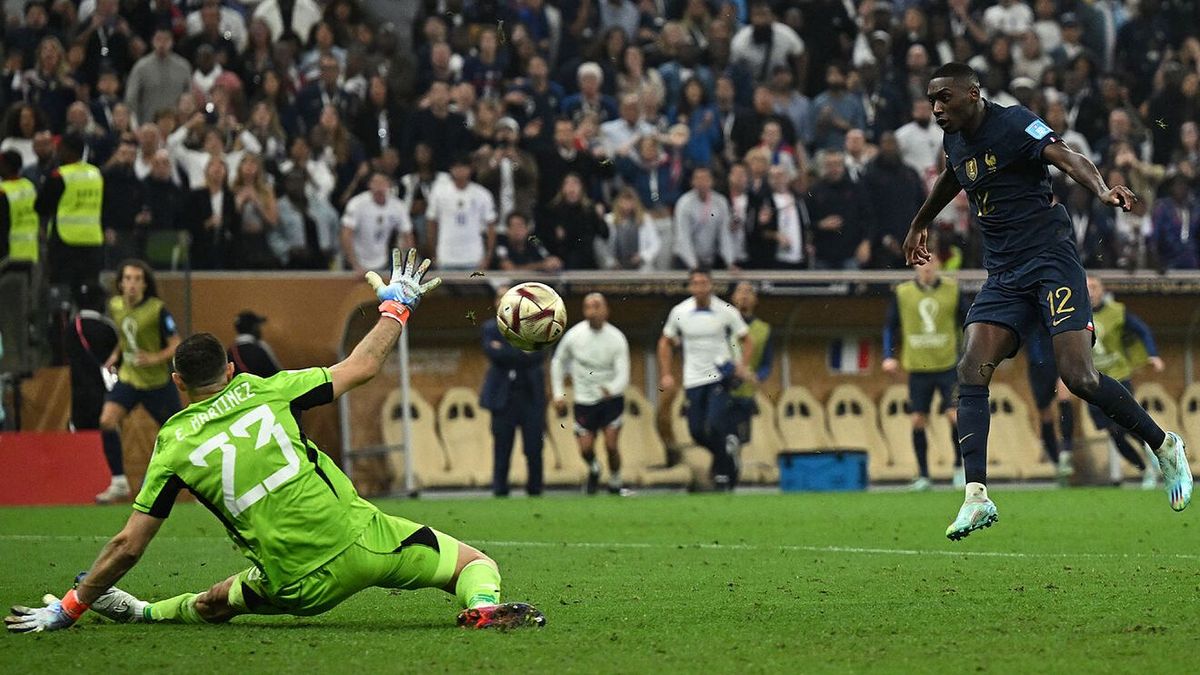
Then there is Emiliano Martínez in the 2022 World Cup final. With France attacking in the 123rd minute, Randal Kolo Muani broke through for what looked like a championship-winning chance.
Martínez spread himself and stopped the shot with his leg. Seconds later the final went to penalties. Argentina won the shootout and the World Cup.
That save represents the other half of the modern goalkeeper's job: when the game reaches its most chaotic point, the goalkeeper can become the single player who determines whether the entire story continues.
Courtois turned the Champions League final into a goalkeeping exhibition

Thibaut Courtois showed the same principle in the 2022 Champions League final. Real Madrid beat Liverpool 1-0, but Courtois made nine saves, repeatedly denying Liverpool when the match was still alive.
The famous image of a goalkeeper is often the player celebrating after a striker scores. In Paris, the goalkeeper was effectively the reason the striker's goal was enough.
The position has been expanding for years
This is why Koeman Jr.'s brace should not be viewed only as a bizarre statistical event. The modern goalkeeper has been moving in two directions at once: closer to the action when his team has the ball, and more decisive when the game becomes desperate.
Manuel Neuer helped redefine the position by treating the space outside his penalty area almost like another defensive zone. Ederson pushed the idea further with elite passing range and confidence under pressure. Alisson combined distribution with extraordinary one-on-one ability. Modern goalkeeping is no longer simply about reacting to shots.
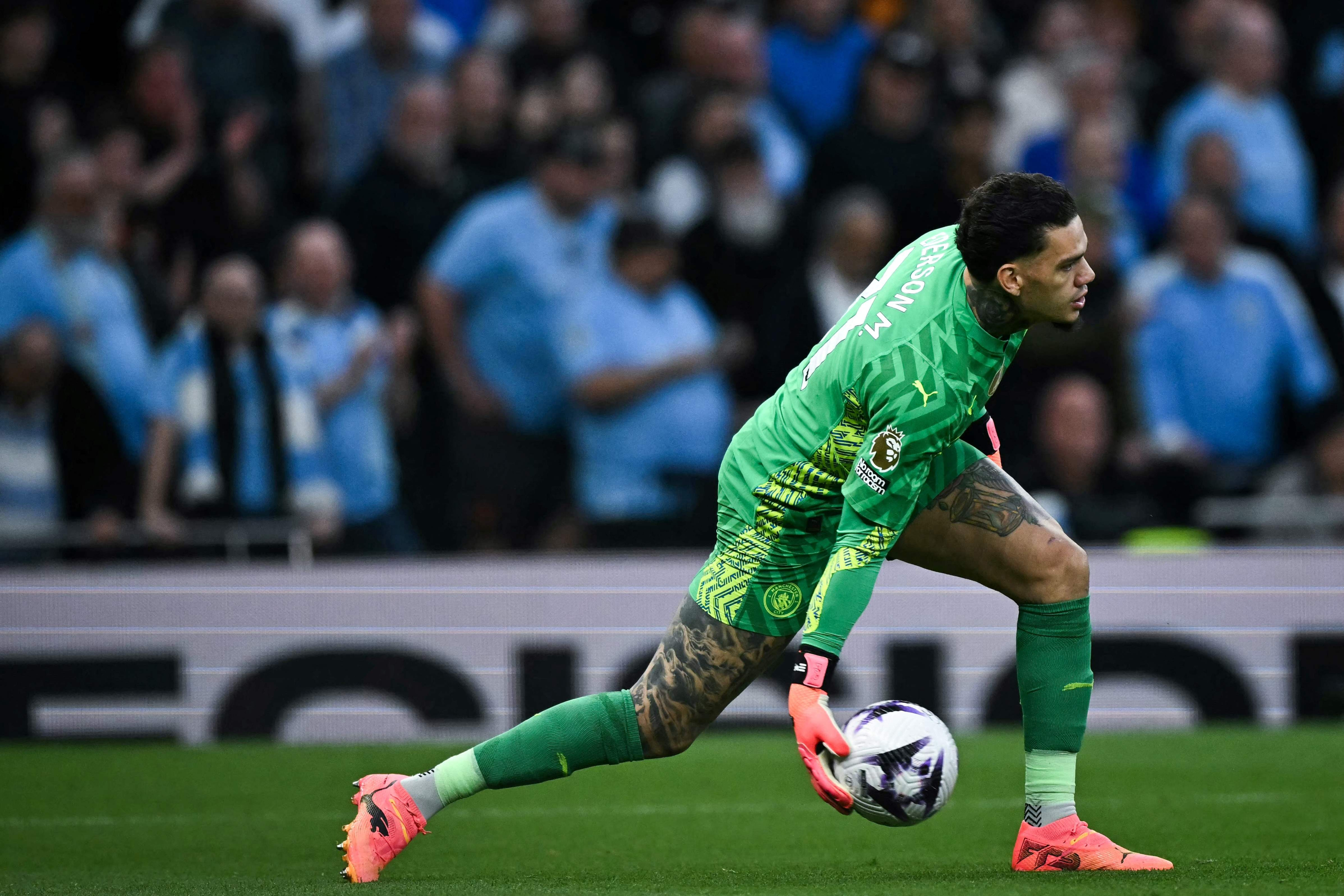
Ederson is particularly important to this evolution. His value is not limited to what happens inside the six-yard box. His ability to launch attacks, find teammates from distance and play accurately under pressure changes how Manchester City can position the rest of the team.

Neuer's legacy is slightly different. He helped normalize the idea that a goalkeeper could defend enormous amounts of space behind a high defensive line. The goalkeeper was no longer waiting for the attack to arrive. He was helping prevent the attack from developing in the first place.
The old exceptions were already warning us
Of course, goalkeepers scoring goals are not entirely new. Rogério Ceni built an extraordinary career as a set-piece specialist for São Paulo, scoring more than 100 goals. José Luis Chilavert regularly took penalties and free kicks for club and country.
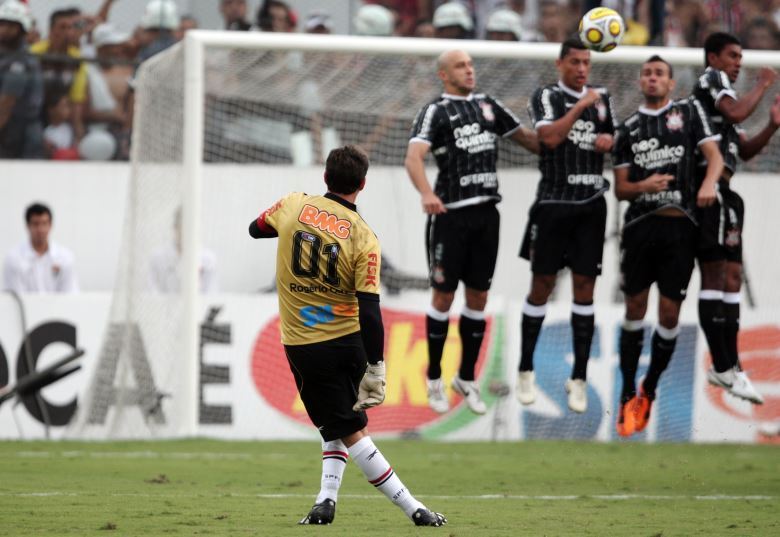
Those players were exceptions. Their goal-scoring ability was part of their individual identity. The difference today is that more of the underlying skills they possessed — composure, passing, technique, decision-making and confidence with the ball — are becoming standard requirements for young goalkeepers.
The new goalkeeper generation is different
This may be the most important part of the Koeman Jr. story. He is 31, so he is not a product of the newest goalkeeper generation. But his performance illustrates the direction younger goalkeepers are being asked to move toward.
| Traditional goalkeeper | Modern goalkeeper |
|---|---|
| Stops shots | Prevents attacks through positioning and anticipation |
| Stays close to the penalty area | Defends space far outside the box |
| Clears the ball | Starts and controls possession |
| Uses feet when necessary | Is expected to be comfortable under pressure with both feet |
| Leaves attacking responsibility to outfield players | Can become an extra attacker in late-game situations |
| A penalty is almost always taken by an outfield player | Some goalkeepers are trusted as regular penalty or set-piece takers |
The final minutes belong to them more than ever
There is a fascinating symmetry here. When a team is winning, the goalkeeper may be the player who makes the save that keeps the lead alive. When a team is losing, the same goalkeeper can leave his box and become an extra attacker.
That creates a strange football equation: the most important player in the final minute can be the one player who is normally furthest from the opposition goal.
Koeman Jr. scored in the 101st minute. Trubin scored in the 98th. Alisson saved Liverpool in the 92nd. Martínez saved Argentina in the 123rd. These moments look unrelated, but they all tell the same story.
The modern goalkeeper has two ways to become a hero late in a match: stop the goal everyone expects, or score the goal nobody expects.
And that changes the psychology of the game
Opponents now have to consider the goalkeeper when defending the final set piece. If he comes forward, someone has to track him. If he stays back, the team loses an attacking body. If the ball is cleared, he may be the first player capable of restarting another attack.
For the goalkeeper himself, this requires a different mentality. The position is becoming less passive. It demands decisions rather than simply reactions.
The next Koeman Jr. may not look like Koeman Jr.
That is the irony. The next generation probably will not produce dozens of goalkeepers scoring braces. That is still extremely rare. What will become more common is everything that makes those moments possible.
Young goalkeepers will be more comfortable taking responsibility, receiving the ball under pressure, starting attacks, defending space, making decisions outside their box and joining the final attack when the score demands it.
The spectacular goal is only the visible part of the change.
Koeman Jr. just gave the trend a perfect headline
Ronald Koeman Jr. did something that had never happened in the Eredivisie: he scored twice in one match as a goalkeeper. The second came in the 11th minute of added time and rescued a point for ten-man Telstar.
It is a fantastic football story on its own. But the bigger story is what surrounds it.
Goalkeepers are becoming playmakers. They are defending more space. They are being trusted with the ball. They are deciding matches with saves in the last seconds and, increasingly, with goals in the last seconds.
The old No. 1 waited for the game to come to him. The new one is expected to influence where the game goes.
And sometimes, when the clock reaches 90+11, he is the one taking the final shot.