
When Second Division Teams Reach Europe: The Strange Club That Will Face Celtic and Sunderland
On Thursday, a club from a Portuguese town most football fans outside Portugal could probably not find on a map will walk onto a European stage. SCU Torreense will play Lillestrøm in the Europa League. That sentence sounds ordinary until you look at the rest of it: Torreense finished third in Portugal's second division, lost the promotion play-off, and yet will spend the next few months playing European football against Celtic, Sunderland, Real Sociedad and Olympiacos.
The strangest part is that Torreense did not even get promoted
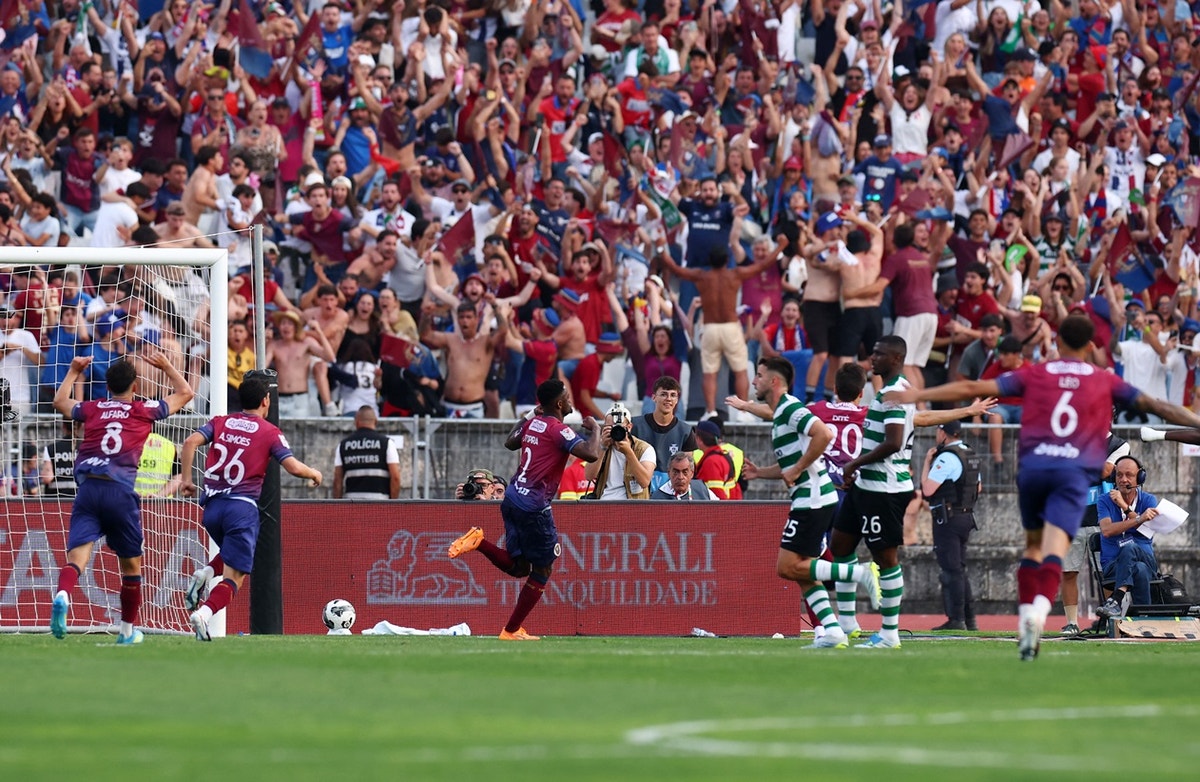
Torreense's 2025/26 season ended with an almost absurd sequence of events. The club reached the Portuguese Cup final while still playing in Liga Portugal 2, then defeated Sporting 2–1 after extra time to become the first second-tier team ever to win the Taça de Portugal. The reward was a place in the Europa League league phase.
Four days later, Torreense had another huge match. They were trying to complete the impossible by earning promotion to the top flight as well. Instead, Casa Pia won the promotion play-off 2–0 on aggregate. Torreense stayed in the second division. Their reward for losing the promotion battle was, somehow, European football.
A cup final that changed everything
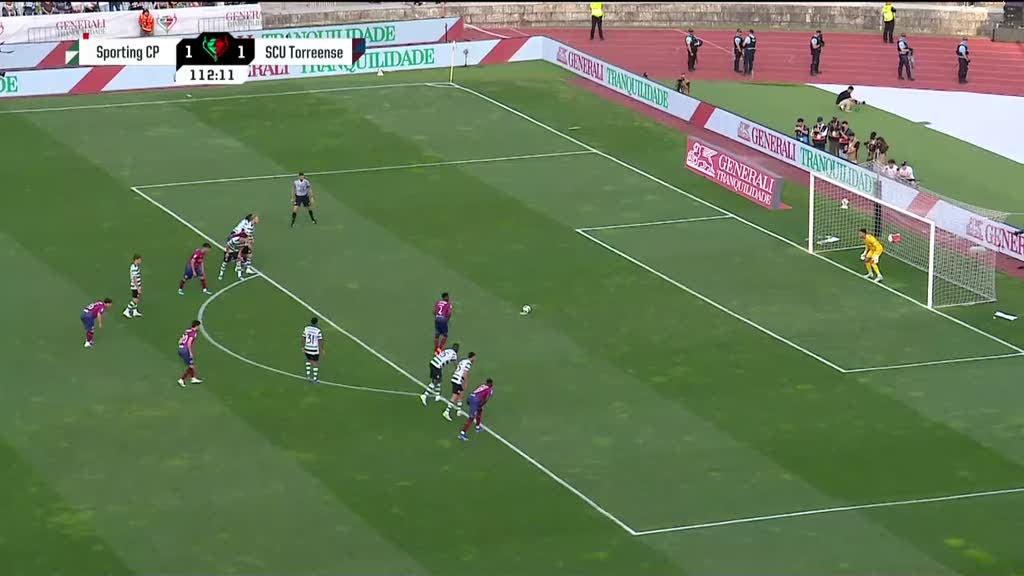
The final against Sporting was not a lucky 90-minute escape. Torreense scored after only four minutes when Kévin Zohi finished from a corner. Sporting eventually equalised through Luis Suárez, but the underdogs survived 120 minutes of pressure. Then, in the 113th minute, Maxi Araújo was sent off after conceding a penalty. Captain Stopira stepped up and scored.
Sporting had 72% possession and 33 shots. Torreense had eight. Yet the team from Torres Vedras left the national stadium with the trophy. The result was not only the biggest achievement in the club's history; it created a European story that Portugal had not seen before.
They are not even playing Europe at home
There is another wonderfully strange detail. Torreense's own Manuel Marques stadium holds only around 2,500 spectators and does not meet UEFA's requirements for Europa League matches. So their European home is about 100 kilometres away in Leiria, at the 23,888-capacity Estádio Municipal Dr. Magalhães Pessoa.
The club will therefore experience its first European campaign in a stadium more than nine times larger than its normal home. Its four home opponents are Olympiacos, Sunderland, Celtic and Ararat-Armenia. Away trips take Torreense to Real Sociedad, Ferencváros, Lech Poznań and Lillestrøm.
And Torreense are not the first club to accidentally fall into Europe
European football has a strange tradition of clubs reaching continental competition through a side door. A domestic cup can completely rewrite a club's season, producing European nights for teams whose normal reality is promotion battles, small stadiums and modest budgets.
Wigan: FA Cup winners one weekend, relegated the next

Wigan Athletic produced perhaps the most famous modern version of this story. In 2013, Roberto Martínez's side beat Manchester City 1–0 in the FA Cup final, with Ben Watson scoring in stoppage time. It was Wigan's first major trophy and earned the club its first ever European campaign.
There was just one problem: three days after the final, Wigan were relegated from the Premier League. They had won the FA Cup and been sent down to the Championship almost simultaneously. Four months later they were beginning a Europa League campaign while playing second-tier football.
Birmingham: relegated, then Europe
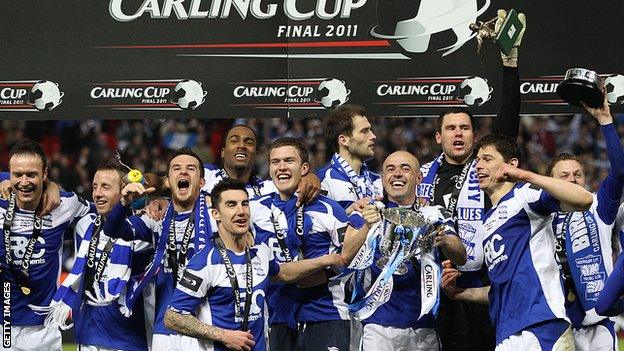
Birmingham City's 2011 story was even more surreal. They beat Arsenal 2–1 at Wembley to win the League Cup, with Obafemi Martins scoring the decisive goal in the 89th minute. It was their first major trophy in almost 50 years.
Then came the cruel twist. Birmingham were relegated from the Premier League on the final day of the season. Their prize for winning the League Cup was a place in the Europa League — which meant they began the following campaign in the Championship while simultaneously travelling around Europe.
Gueugnon: a town of 8,000, the Stade de France and the UEFA Cup

In 2000, FC Gueugnon took the idea even further. The club came from a town of roughly 8,000 people and played in France's second division. They eliminated several top-flight opponents before reaching the League Cup final against Paris Saint-Germain.
Gueugnon then beat PSG 2–0 at the Stade de France. The victory earned the club a place in the UEFA Cup, turning a small industrial town into a European destination. Their adventure lasted only one round, ending against Greek side Iraklis, but the story remains one of the most extraordinary cup upsets in French football.
The pattern is almost always the same
Torreense, Wigan, Birmingham and Gueugnon followed different routes, but the basic mechanism was identical: a club living outside the usual European elite wins a domestic knockout competition and suddenly finds itself sharing a competition with teams whose budgets and histories are vastly different.
And that is what makes Torreense so fascinating. Their European opponents are not just random clubs. Sunderland, Celtic, Olympiacos and Real Sociedad are institutions with enormous domestic histories. Torreense's own European history currently consists of one line: none. UEFA lists 2026/27 as the club's first European campaign.
Their Europa League schedule looks almost fictional
The first test comes on 17 September away to Lillestrøm. Then comes Sunderland in Leiria, Ferencváros away, Ararat-Armenia at home, Celtic at home, Real Sociedad away, Lech Poznań away and finally Olympiacos in Leiria. Eight matches against eight different opponents, all while Torreense continue life in Portugal's second tier.
The most remarkable part is that Torreense are not entering Europe because someone gave them a special invitation or because of a technical loophole. They won the Portuguese Cup. They beat Sporting. They earned their place.
That is the beauty of knockout football. For most of the season, Torreense were trying to climb one division. For one extraordinary afternoon in May, they climbed much higher — all the way into the Europa League.
And now the club has a strange problem to enjoy: while the rest of Portuguese football asks whether Torreense can finally reach the top flight, Europe is asking a completely different question — how far can a second-division cup winner go?